


Balance Exercises for Seniors: Building Strength, Stability and Confidence at Any Age

Losing your footing on a curb, wobbling while reaching for something on a high shelf, catching yourself after a misstep on the stairs. These small moments add up, and they are often the first sign that the body's sense of balance needs some attention. At Viva Elise, balance exercises for seniors are one of the most requested parts of our sessions, because the benefits reach far beyond avoiding a fall. Better balance means walking with more ease, standing up from a chair without a second thought, and moving through daily life with steadier confidence.
Why Balance Deserves More Attention as We Age
Balance relies on coordination between the eyes, the inner ear, the muscles, and the joints, all sending information to the brain at once. As the years pass, each system can slow down a little, and the brain works harder to keep everything in sync. This is part of why learning how to improve balance becomes more relevant with time, not because the body is failing, but because it responds well to consistent, targeted practice. The encouraging part is that this system stays trainable well into later life, with regular, well matched practice.
A few signs point to balance work being overdue:
• Holding onto furniture or walls while moving around the house
• Feeling unsteady when turning quickly or looking over a shoulder
• Avoiding uneven sidewalks, stairs, or unfamiliar spaces
• Needing both hands to stand up from a low chair
Balance Exercises for Seniors Start with Body Awareness
Proprioception is the body's ability to sense its own position in space without looking down. It lets someone walk across a dim room without losing their footing, and it tends to fade quietly with age unless challenged on purpose. Balance exercises for seniors that focus on this skill are simple by design. Standing on one leg, lightly holding a chair for support, is one of the most effective ways to wake this system back up. Our Aging with Ease program builds movements like this one gradually, so each session matches what a person's body is ready for that day.
Understanding Your Body's Balance Systems
Alongside proprioception, the inner ear plays its own role in keeping a person upright, particularly when the head moves. This vestibular system responds to changes in position and speed, and it works quietly in the background during something as ordinary as turning to check for traffic before crossing a street. This inner ear system plays a role too, whether the search is for balance exercises for elderly parents or for one's own stability. It has enough depth to deserve its own conversation, and we cover it in detail in our guide to vestibular exercises, for anyone who wants to go further into this side of balance training.

Moving in Every Direction, Not Just Forward and Back
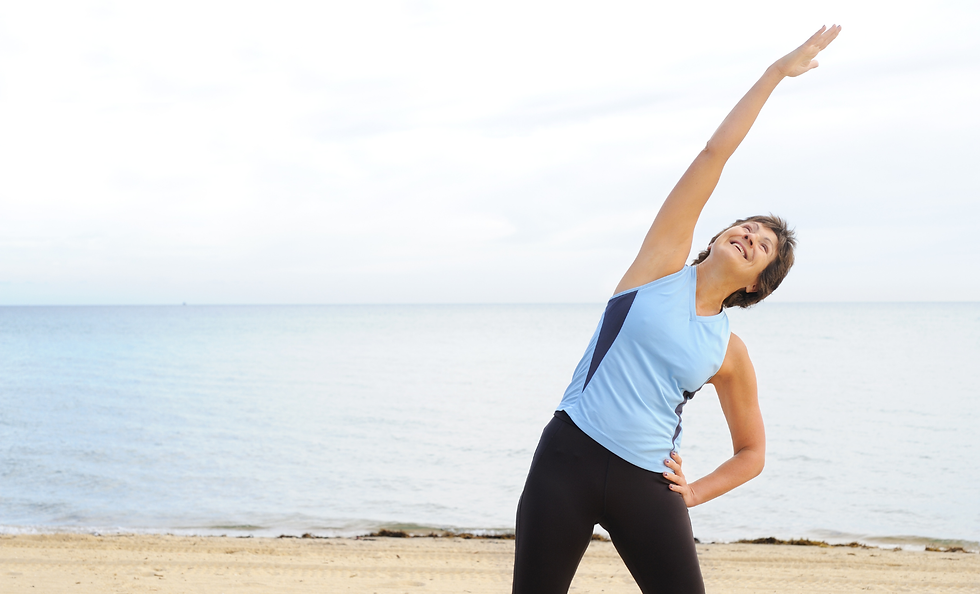
Daily life rarely moves in a straight line. Reaching sideways for a grocery bag, twisting to grab something from the back seat, stepping around a pet underfoot, these all call on balance that a straight walk never trains. Stepping to the side and reaching across the body, then rotating and reaching the other way, prepares the hips and core for exactly these situations. This kind of varied, three dimensional movement sits at the center of the Movement Classes Chicago sessions Elise leads each week, where neighbors work on stability together in a format that stays social and enjoyable. Rotation and side stepping also carry over into gardening, dancing, and keeping up with grandchildren at the park.
Strong Legs, Steadier Steps
Balance training works best alongside real strength, especially through the hips and legs. A sit to stand exercise, rising from a chair without pushing off with the hands, builds exactly the kind of power needed to recover quickly from a stumble. It also carries into everyday movement, from standing up off a couch to climbing out of a car. Our Personal Trainer in Chicago sessions pair this strength work with the balance drills already mentioned, so the two reinforce each other instead of living in separate routines.
Bring It All Together
A few simple practices bring the pieces above into one short routine.
• Standing on one leg near a chair, a few times on each side
• Stepping to the side and reaching across the body, then switching directions
• Rising from a chair without using the hands, several times in a row
A few minutes of practice, a handful of times a week, tends to bring a noticeable difference within weeks. The goal reaches beyond fall prevention exercises for seniors, since steadier balance also brings more freedom to travel, garden, dance, or move through an ordinary day without a second thought. At Viva Elise, sessions are built around where a person's body stands right now, shaped by Elise Foss's thirty years in exercise science and her background in corrective and somatic movement. Many clients across Skokie and the North Shore keep coming back long after their first session. Reaching out starts with a simple step, whether that means calling 847-226-4923, writing to elise@vivaelise.com, or visiting our Getting Started page to request a consultation and find the right fit for your goals.


Comments